Product line-up
HOME > Product line-up > Bumping Prevention Device

TOKYO RIKAKIKAI CO., LTD.
HOME > Product line-up > Bumping Prevention Device
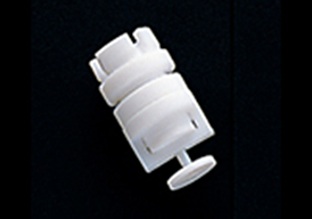
C-1 (standard type)
The cap is equipped with a valve at
the tip. It closes the valve when a
pressure difference arises between
the condenser side and the sample
flask side, preventing sudden
boiling. The valve opens when the
pressure difference is eliminated.
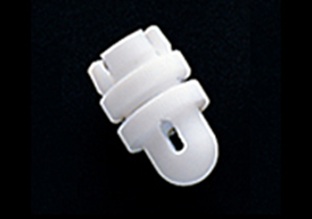
C-2 (rocket type)
By applying steam to the
hemispherical part, it creates
efficient convection inside the
flask and easily prevents bumping.
It is suitable for substances with
relatively weak bumping power.
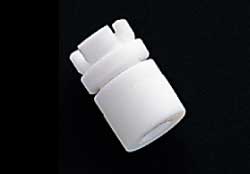
C-3 (filter type)
The glass filter (G3) reduces sudden
pressure changes to prevent
bumping. It is also effective in
preventing powder from scattering
when drying crystal samples.
Installation Method
Installation Example
< Removal method >
Apply force to bend the main body and rotary joint downward, and it can be easily removed.
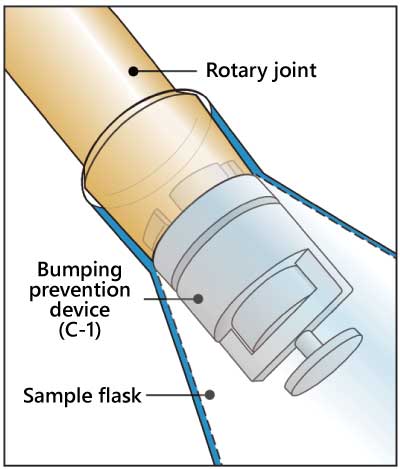
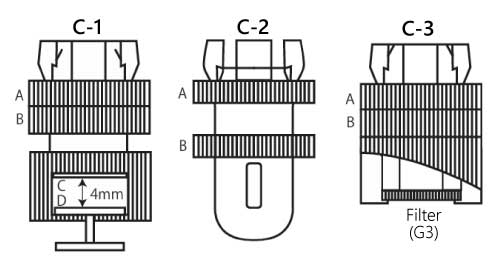
Note: The applicable inner diameter of the rotary joint is 20.2±0.5mm or less. If it feels too loose or difficult to insert, make minor adjustments by turning B.
C-1
This is ideal for use with solvents or samples prone to vigorous bumping, or when using 500mL, 1L, or 2L sample flasks (pear shaped flasks) where standard trap balls are difficult to use.
There is a maximum gap of 4mm between C and D. The degree of bumping varies depending on the strength of the vacuum system, as well as the solvent or sample being used. Initially, please use with a gap of about 2mm. Afterward, adjust the gap according to the degree of bumping.
D closes due to the pressure difference inside the concentration system. However, the pressure difference may not equalize readily, and D may sometimes fail to open. Even in such cases, concentration continues through the small hole provided in D.
If you need to force D open, reduce the concentration rate by taking measures such as:
C-2
This is ideal for use with solvents or samples with relatively weak bumping tendencies.
C-3
This is effective in preventing splashing during the drying of crystalline samples and suppresses foaming samples from rising inside the evaporator.
It is equipped with a G3 glass filter measuring 15mm in diameter and 3mm in thickness (the filter is replaceable).