Product line-up
HOME > Product line-up > Trap Balls

TOKYO RIKAKIKAI CO., LTD.
HOME > Product line-up > Trap Balls
One of the most common problems encountered during concentration with a rotary evaporator is bumping.
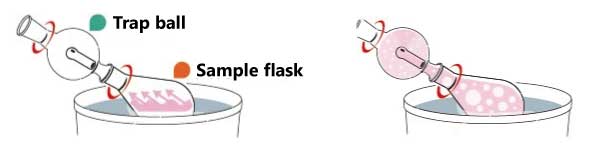
A trap ball helps minimize the impact of bumping by preventing sample from entering the condenser and vacuum system. Here, we introduce the purpose and benefits of trap balls, as well as how to select the right one for your application.
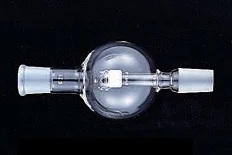
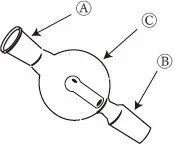
A trap ball is a glassware accessory designed to prevent the sample from overflowing into the receiving flask or condenser due to sudden “bumping”, thereby avoiding sample loss.
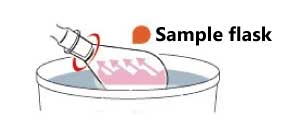
When a rotary evaporator is placed under vacuum, the boiling point of the sample in the sample flask (pear shaped flask) drops sharply. This can cause “bumping,” a phenomenon where vaporization cannot keep pace with the pressure drop, leading to sudden, violent boiling. When bumping occurs, the valuable sample is forcefully ejected, traveling with the vapor into the condenser or receiving flask.
This can lead to issues such as:
While measures can be taken to prevent bumping—such as using the vacuum ramp program on a vacuum controller—it cannot always be completely avoided. This is where a trap ball comes in. If unexpected bumping occurs, the trap ball catches the splashed sample, preventing it from entering the receiving flask. Furthermore, as long as the trap ball is kept clean, the valuable sample can be recovered and returned to the sample flask to continue concentration. In addition, a trap ball can also serve as an adapter when the joint sizes of the rotary joint and the sample flask do not match.